
The Vetted View
When a Business Solves a Problem People Can’t Ignore: Inside a Childcare Staffing Franchise Opportunity
Some businesses have to create demand. Others exist because people are already searching, sometimes desperately, for a solution. Childcare falls squarely into the second category.
A parent has to get to work, but their childcare falls through. School is closed, but the office isn’t. A child is sick and can’t go to daycare. A family member is unexpectedly admitted to the hospital, and Mom or Dad needs to be there, but someone still needs to care for the children at home. These aren’t hypothetical inconveniences. They are the kinds of situations families navigate every day, often piecing together help from relatives, neighbors, babysitters, online caregiver platforms and whatever other options they can find. Sometimes, there simply isn’t a good option.
That is what caught my attention about the Oliver’s Nannies childcare franchise opportunity. Yes, it is a business, and an owner needs to evaluate its economics, investment, operating model and potential for growth just as carefully as any other franchise. But underneath all of that is something more fundamental: there is a real problem that needs to be solved.
The Childcare Problem Is Bigger Than Daycare → Why the Childcare Problem Is Bigger Than Daycare
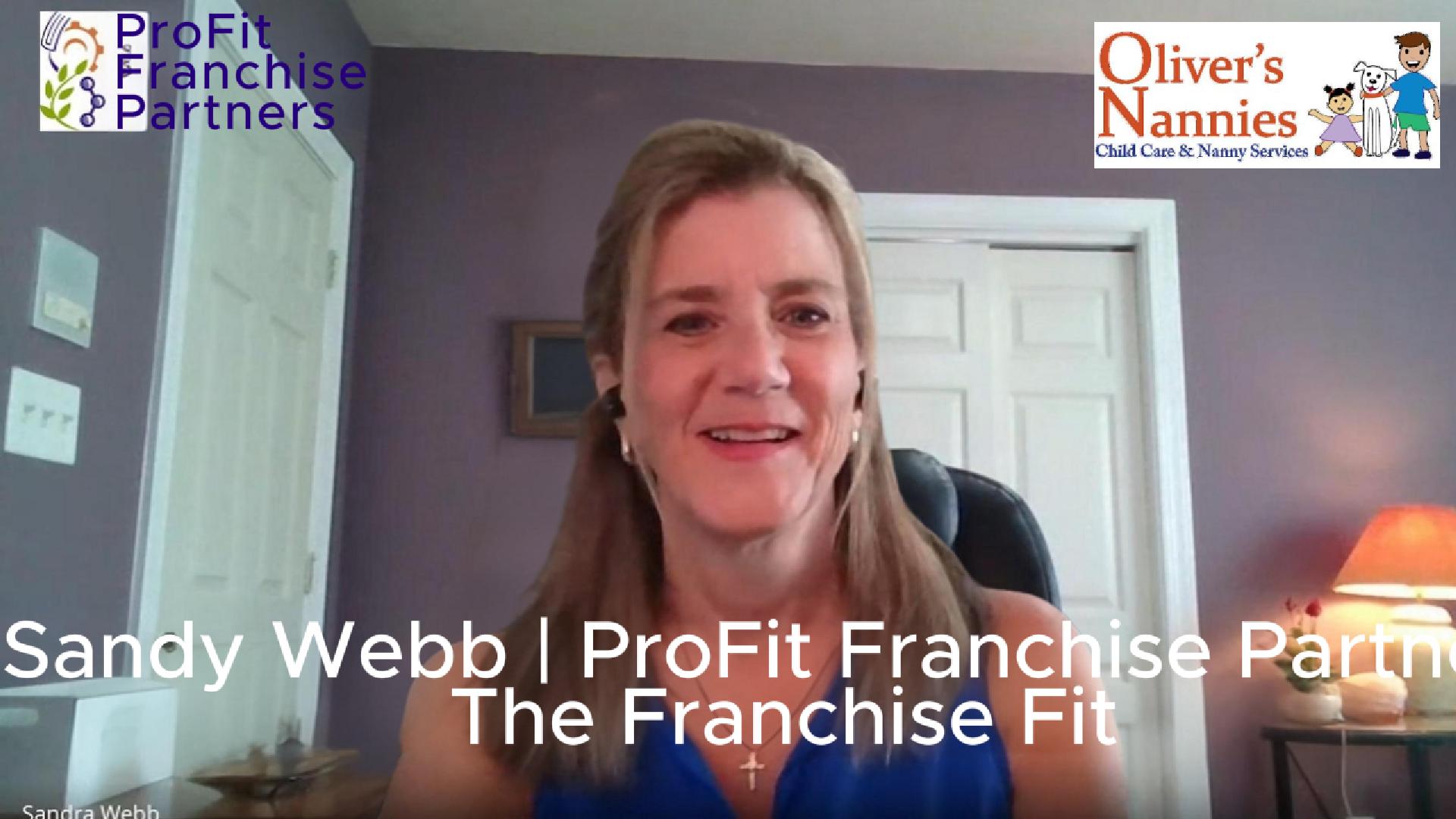
When I recently sat down with Emily Ringley of Oliver’s Nannies for an episode of The Franchise Fit, we talked about the idea of a childcare desert, a community where the number of children needing care exceeds the childcare options available. But capacity is only part of the problem.
Even when traditional daycare is available, it doesn’t necessarily accommodate the way families actually live. Daycare has set hours, schools have breaks, parents work different schedules, children get sick, and life happens outside neat Monday through Friday boxes.
When families turn to in-home care, they face another challenge: finding someone they trust. Parents aren’t simply looking for a person who is available from 2:30 to 5:00. They are trusting someone with their children, inside their homes. They want someone who is screened, qualified and reliable, but they also want someone whose personality and approach to childcare fit their family. That’s a very different problem to solve.
Watch the full conversation on YouTube.
What Business Are You Actually Buying? Childcare Staffing, Not Daycare
This was one of my favorite questions from my conversation with Emily because the answer cuts through some of the assumptions someone might make about this business. I asked her, What type of business am I really buying?
Her answer was simple: childcare staffing.
That distinction matters. Oliver’s Nannies isn’t a daycare center, nor is it simply an online directory connecting parents with independent babysitters. The business recruits, screens, hires and supports caregivers while working with families to understand the kind of care they actually need.
The model includes background checks, references, interviews, training and a matching process designed to consider more than availability. Oliver’s also looks at caregiving style and personality when matching nannies and families. From an owner’s perspective, that means you’re building a business around people, recruiting, customer service, operations and relationships.
You don’t necessarily need to come from childcare or education, but you probably do need to care about people. And that’s where this particular franchise opportunity becomes especially interesting to me.
What If Meaning Is Part of Your Definition of Success?
When I work with prospective business owners to find the right franchise fit, financial goals obviously matter. Nobody should invest in a franchise simply because the mission makes them feel good, but money isn’t the only reason people pursue ownership.
For some, the goal is greater control over their time. For others, it is building an asset, creating another source of income, leaving corporate America or developing something they may eventually pass to the next generation. And for some people, the work itself needs to matter. They want to go home knowing the business they are building made someone’s life a little better that day.
Imagine being the business owner whose team answered the phone when a parent suddenly had nowhere else to turn, allowing that parent to get to work, sit beside a loved one in the hospital, find dependable help after weeks of trying to piece together childcare, or simply gain some much-needed breathing room.
That’s not a financial metric you’ll find neatly summarized on a spreadsheet, but for the right owner, it can be an important part of the return they are looking for from business ownership.
The Business Serves the Caregiver, Too
There was another part of my conversation with Emily that I found particularly interesting. Oliver’s isn’t only trying to create a better experience for families. Its model also creates a more structured employment environment for the nannies themselves.
Emily explained that Oliver’s nannies are W-2 hourly employees who can receive paid time off and workplace support. Rather than operating entirely on their own in a private family’s home, the caregiver has an organization behind them.
That means an owner has the opportunity to build something that can make a difference on both sides of the relationship, providing families with dependable childcare while creating professional opportunities for the people providing it. For someone who is naturally community-minded, that combination may carry real weight.
Need-Based Businesses Deserve a Closer Look
There’s another reason I pay attention when I encounter a business solving this kind of problem. Trends change, consumer preferences change, and discretionary spending changes, particularly when economic conditions become uncertain.
Many of the underlying circumstances that create the need for childcare, however, don’t simply disappear when the economy changes. Parents still need to work, children still need supervision, schools still close for breaks, and family emergencies still happen.
That doesn’t mean any childcare business, or any franchise, is automatically recession-proof or a safe investment. There is no such thing as a franchise without risk, and demand for a service does not guarantee the success of an individual business.
But when evaluating an opportunity, I think there is tremendous value in asking: What problem does this business solve, and how badly do people need that problem solved?
That’s a very different question from What’s the hottest franchise category right now? And I think it’s often a better one.
An Emerging Brand Creates a Different Kind of Opportunity → Emerging Vs. Established: What an In-Home Childcare Franchise Trade-Off Looks Like
Oliver’s Nannies began franchising in 2023, making it a relatively young franchise system. Emily shared that as of April 2026, the system had approximately 15 open locations with several more in development. For some prospective owners, that will be exciting. For others, it may be a reason to proceed more cautiously, and both reactions are reasonable.
An emerging franchise can offer significant geographic white space, greater access to leadership and the opportunity to become an early operator in a market. Early franchisees may also have opportunities to contribute feedback as the system develops. The tradeoff is that a younger system doesn’t have the operating history of a franchise with hundreds of mature locations.
Neither is inherently better. It comes back to fit. Some owners want a highly established system with decades of history and very little left to figure out, while others are comfortable with more uncertainty and genuinely enjoy helping shape something while it grows. Knowing which person you are matters.
Would You Want to Build This?
That’s ultimately the question I kept coming back to after my conversation with Emily. Not simply, Is Oliver’s Nannies a good franchise? And certainly not, Should everyone interested in business ownership consider childcare?
The better question is: Would solving this particular problem mean something to you?
Could you see yourself building relationships in your community, developing a team, creating employment opportunities and becoming a resource families know they can call when they need help? Would you enjoy the recruiting, staffing, customer service and people-management aspects of the business? Does the lifestyle and role of the owner match the life you’re actually trying to create? And, after all of that, do the economics make sense for you?
That’s franchise fit.
A compelling concept can get your attention, a meaningful mission can make you emotionally invested, and strong market demand can make an opportunity worth investigating, but none of those things eliminates the need for careful due diligence. The goal isn’t to find a franchise that sounds exciting. It’s to understand the business well enough to determine whether the opportunity, the economics and the owner’s role fit you.
If you’re exploring business ownership but aren’t sure what type of franchise fits your goals, lifestyle and strengths, let’s have a Franchise Fit Conversation. Sometimes the best place to begin isn’t with a list of franchises at all. It’s with understanding what you’re actually trying to build.
{ “@context”: “https://schema.org”, “@type”: “VideoObject”, “name”: “Oliver’s Nannies Franchise: A New Solution to the Childcare Crisis”, “description”: “Emily Ringley of Oliver’s Nannies joins The Franchise Fit to discuss the childcare need the business addresses, how the in-home childcare staffing franchise model works, and the type of owner who may be a good fit.”, “thumbnailUrl”: “https://i.ytimg.com/vi/1zHbP-T-78s/maxresdefault.jpg”, “uploadDate”: “2026-08-24T09:00:00-04:00”, “duration”: “PT18M10S”, “embedUrl”: “https://www.youtube.com/embed/1zHbP-T-78s”, “contentUrl”: “https://www.youtube.com/watch?v=1zHbP-T-78s”, “publisher”: { “@type”: “Organization”, “name”: “ProFit Franchise Partners”, “url”: “https://www.profitfranchisepartners.com/” } }
Ready to Talk?
Take the next step toward the right franchise opportunity.
Schedule a conversation to talk through your goals, investment range, and the kinds of franchise models that may fit your vision.