
The Vetted View
Franchise Ownership Evolution: From Operator to Business Leader

Many people exploring franchising imagine a future where they eventually step away from daily operations and focus on leadership, growth, or additional investments.
That vision isn’t unrealistic. However, it usually doesn’t happen immediately.
Instead, most successful owners experience a natural franchise ownership evolution that begins with learning the business from the inside before building a team and stepping into a leadership role.
Understanding this progression helps prospective owners choose a business model that aligns with how they want to operate long term.
Understanding Franchise Ownership Evolution
Many people assume the owner’s role will quickly become managerial. In reality, most successful franchise owners first spend time learning the operational details that make the business work.
Early involvement builds confidence in several critical areas. Owners gain a clear understanding of customer expectations, operational systems, staffing challenges, and financial drivers.
As a result, when the time comes to hire and delegate responsibilities, they can lead from experience rather than guesswork.
That foundation often determines how smoothly the business grows.
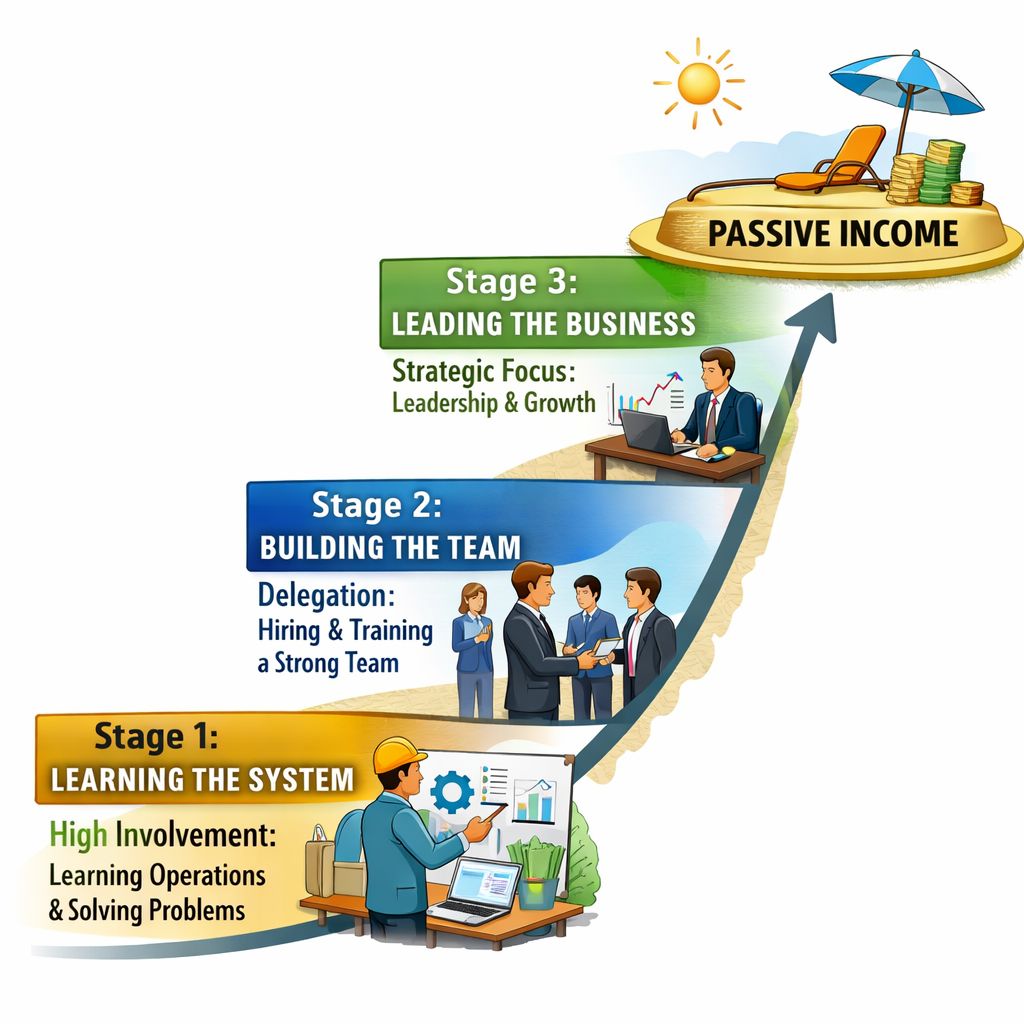
The Three Phases of Franchise Ownership Evolution
Although every business is different, many franchise systems follow a similar ownership progression.
First, the owner learns the operation.
In the beginning, owners focus on understanding the systems, customer experience, and operational processes. This stage builds the knowledge needed to lead effectively later.
Next, the owner builds a team.
After learning the business, owners begin hiring technicians, service staff, or managers. As responsibilities shift to trained employees, systems become more predictable and scalable.
Eventually, the owner leads the business.
Over time, many owners move away from day-to-day service delivery and focus more on leadership, strategic growth, and developing the team.
Importantly, certain industries naturally support this type of ownership progression.
Industries That Support Franchise Ownership Evolution
Some franchise models are particularly well suited for owners who want to move from hands-on operator to business leader over time. These businesses rely on trained staff, repeatable systems, and operational structure that allows responsibilities to shift gradually.
Below are three examples.
Restoration and Property Services
Restoration and specialty cleaning businesses often follow a strong ownership evolution model.
Early on, owners learn how projects move from initial customer contact to service delivery and job completion. As the business grows, trained technicians handle field work while the owner focuses on staffing, marketing relationships, and operational leadership.
One example in this category is Voda Cleaning & Restoration, which provides water damage restoration, carpet cleaning, and specialty cleaning services. Because trained crews perform the work, the owner’s role can evolve toward team leadership and business growth.
Home Services Franchises
Home services also offer a structure where owners can gradually transition away from direct service work.
Typically, these businesses rely on technician teams who handle the operational work while systems manage scheduling, marketing, and customer communication.
For example, LIME Painting is a values-based, high-end, custom painting and contracting service provider that focuses solely on high-value homes. Franchisees start as Owner-Operators while they build their business, and as they grow, they move toward their sweet spot of strategic leadership.
B2B Service Franchises
Some business-to-business service franchises support ownership evolution through recurring commercial clients and structured service delivery teams.
In these businesses, employees perform the operational work while the owner focuses on recruiting, client relationships, and business development.
A good illustration is System4 Facility Services, a franchise that handles all business facility service needs ranging from inside services (commercial cleaning services, hard floor care, window cleaning, etc.) to outside services (commercial landscaping, parking lot services, lighting maintenance,etc.). Because services are delivered by trained staff, owners often shift quickly toward leadership and growth as the business expands.
Choosing a Franchise Model That Fits the Owner
Not every franchise system is designed for the same ownership experience.
Some models require ongoing hands-on involvement from the owner. Others are structured so the owner gradually moves from operator to team builder to business leader.
Because of that difference, prospective owners often benefit from starting with a different question.
Instead of asking, “Which franchise brand is best?” a more useful question is:
What type of owner do I want to become over time?
Once that answer becomes clear, identifying the right industries and opportunities becomes far easier.
Final Thought on Franchise Ownership Evolution
Franchise ownership evolution rarely means stepping away from the business immediately.
Instead, successful owners build operational knowledge first. Then they build teams, refine systems, and eventually shift toward leadership and growth.
Understanding that progression helps prospective owners evaluate opportunities more realistically and choose business models that support their long-term goals.

Ready to Talk?
Take the next step toward the right franchise opportunity.
Schedule a conversation to talk through your goals, investment range, and the kinds of franchise models that may fit your vision.